Smart Solutions for Sustainable Energy
A Mobile Application for Original Equipment Manufacturer
PROJECT SUMMARY
Brief description
Client Overview
Mission and Objectives
Project Team

CHALLENGES
Developing a mobile application for Original Equipment Manufacturers (OEMs) involves overcoming complex technical and operational challenges.The primary challenge was integration, stemming from the lack of unified standards and centralized APIs.
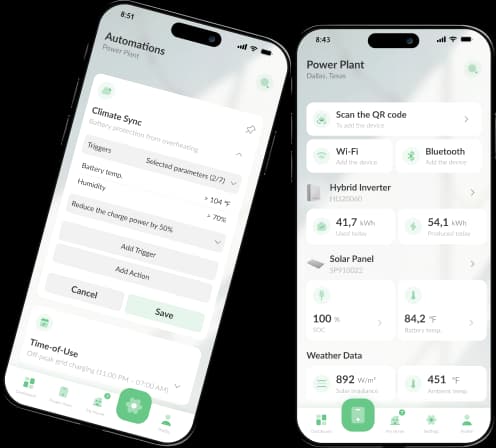
We also had to address UX and functionality issues. Critical tasks included balancing offline data availability with device storage limitations, implementing visual statuses and notifications, and integrating QR scanners. Additionally, ensuring remote monitoring and diagnostics capabilities was essential.
During development, the team also considered security risks associated with processing sensitive data. Vulnerabilities in third-party libraries or insecure inter-process communication channels posed potential threats of data breaches. Implementing a zero-trust architecture and conducting regular penetration tests became crucial security measures.
Testing on real devices posed a significant challenge for us. However, conducting tests under realistic user conditions could ensure robust app performance while reducing the reliance on maintaining an extensive in-house device lab.
Developing the application for this specific OEM demanded meticulous attention to compatibility, user experience, and security, supported by reliable testing frameworks and adaptive integration strategies tailored to their unique equipment. We addressed these challenges through close collaboration with the OEM to standardize APIs, ensuring the application’s long-term reliability and seamless support within the Virtual Power Plant (VPP) ecosystem.
SOLUTION
Overview of the solution developed
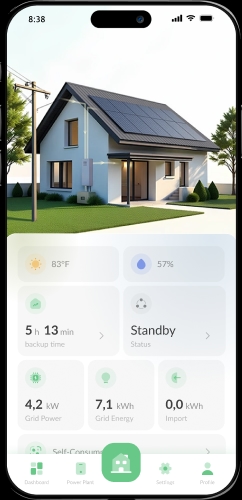
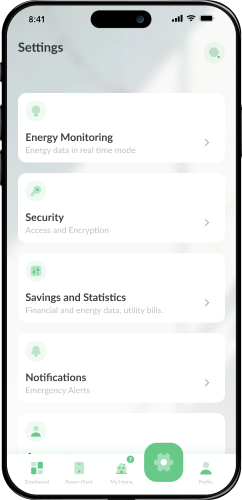
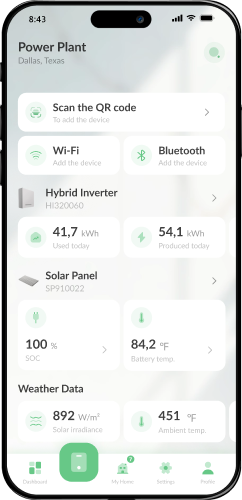
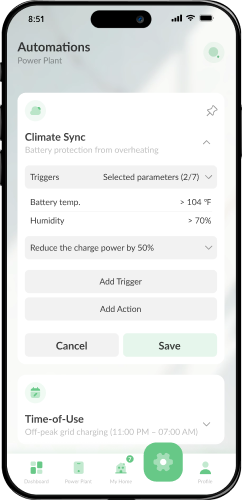
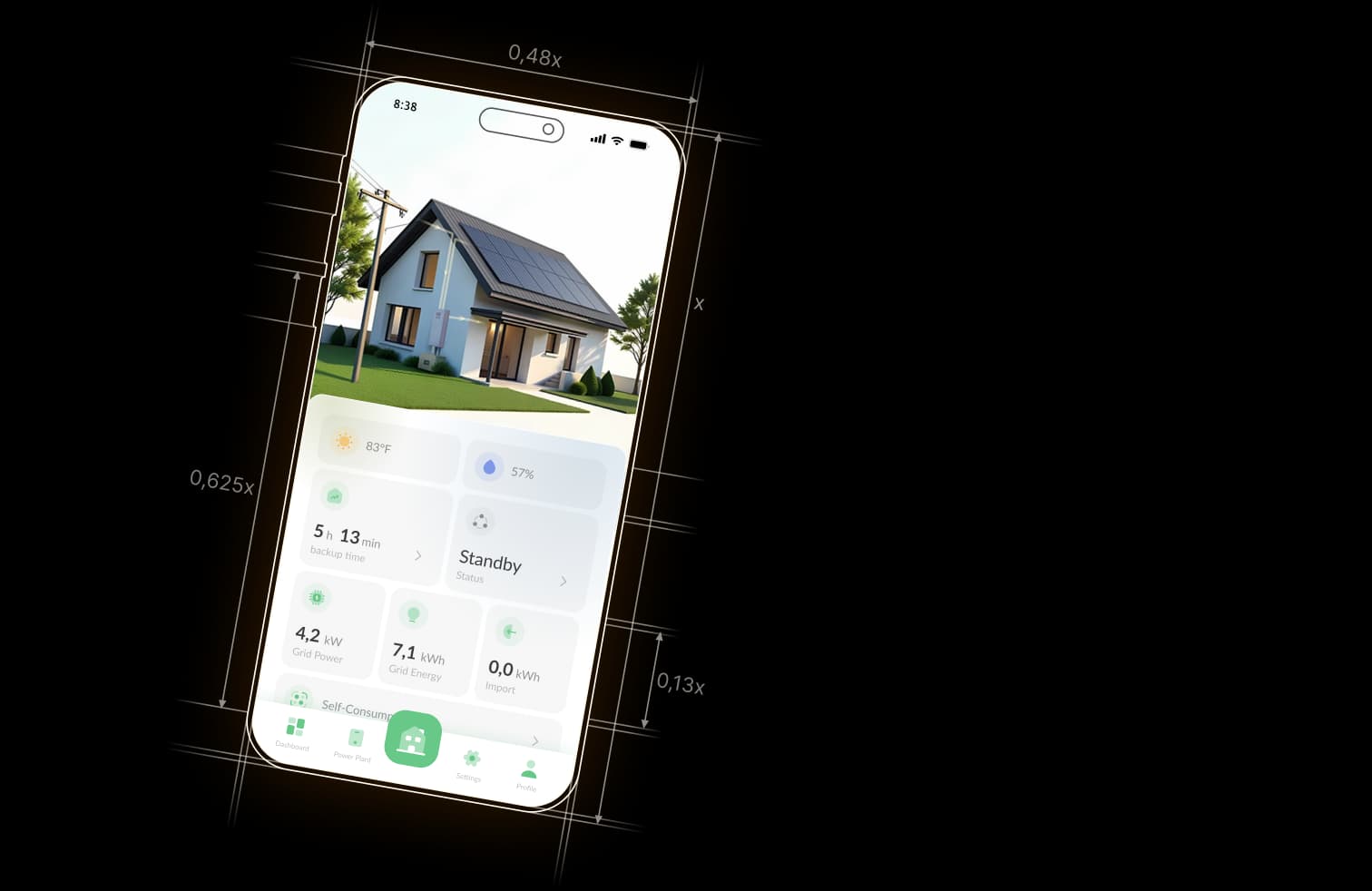
The development of a mobile application for an EMS included two core modules: one for customers, which provides transparency and control over energy consumption, and a module for installers, allowing them to efficiently configure and manage energy systems. This dual solution enhances energy consumption efficiency, while simplifying the installation and maintenance process of energy equipment.
UI/UX Solutions
We optimized real-time updates and notifications by designing dynamic UI elements like QR scanners and testing them rigorously across various screen resolutions and OEM-specific hardware. Furthermore, extensive testing across different OEM devices helped optimize QR scanner functionality to mitigate issues with device-specific camera APIs.
UX and Technical Enhancements
We implemented efficient caching mechanisms to balance offline accessibility with device storage limits, ensuring seamless data synchronization upon reconnecting.
Security Solutions
To protect sensitive data, we implemented zero-trust architectures and conducted regular penetration testing to identify and mitigate vulnerabilities in third-party libraries or IPC channels.
DEVELOPMENT PROCESS
Discovery Phase
The outsourcing team joined the in-house team of the customer to understand the project requirements and user needs. This phase involved discussions and collaborations between the team members to gather information on content delivery mechanisms, subscription models, and third-party Integrations.
Design Phase
The team, including developers and UX/UI designers, worked on designing the software architecture documents, database schemas, and Ul for the mobile and web applications. The focus was on creating a scalable and secure architecture that can handle the growing data and user base.
Collaboration and Testing
The team collaborated throughout the development process, with regular code reviews and testing. TestFlight and Google A/B testing were used for testing Release Candidates (RC) and new features. The team also implemented Continuous Integr Integration/ Continuous Deployment (CI/CD) practices to streamline the development process.
Development
The developers started with building the application architecture. They followed the Test-Driven Development (TDD) approach to ensure the quality of the code and implemented features for both the backend and frontend applications.
Deployment and Launch
Once the application was thoroughly tested and all features were validated, the team deployed the application and successfully launched it. They closely monitored the platform's performance and addressed any post-launch issues promptly.
PROJECT RESULTS
01
Impact on the Customer and End-Users
By providing seamless integration with OEM devices, the app offers real-time monitoring and diagnostics capabilities, allowing users to manage their devices more efficiently. This includes features like remote configuration, which simplifies the setup process, and real-time notifications, which keep users informed about device status changes.
The app also addresses critical issues such as offline storage and synchronization, ensuring that users can access essential data even without an internet connection. Moreover, the application's focus on security ensures that sensitive data is protected, providing peace of mind for users who rely on these devices for critical operations.